Trauma-Informed Care is the principle that what happened to you organises how you respond now, and that safety, choice and collaboration must come before any intervention. It frames everything from intake to discharge.
What TIC helps with
- Survivors of abuse, violence or neglect
- Refugees & displaced people
- Veterans & first responders
- Anyone with adverse childhood experiences
- Healthcare and education settings
- Re-traumatisation risk
How TIC works
- 1Assume trauma may be present — never demand disclosure as the price of help.
- 2Make the environment, the language and the pacing predictable.
- 3Offer choice at every step; explicitly invite the person to slow, pause or stop.
- 4Layer specific trauma treatments (TF-CBT, EMDR, IFS) only after safety is built.
Core techniques
- Safety (physical & emotional)
- Trustworthiness & transparency
- Peer support
- Collaboration & mutuality
- Empowerment, voice & choice
- Cultural, historical & gender sensitivity
TIC FAQs
Is trauma-informed care a therapy?
No — it is a framework that should sit underneath any therapy or service. Inside this framework you might then deliver TF-CBT, EMDR, IFS, somatic work or DBT for the specific trauma effects.
Why does TIC matter for everyone, not just therapists?
Schools, clinics, courts and HR teams all interact with trauma survivors every day. TIC reduces re-traumatisation and improves engagement across every helping profession.
Start TIC today — three ways
- · Free 24×7 AI Psychologist — practise TIC techniques anonymously, in 100+ languages.
- · TIC Mastery in 30 Days — for clinicians, counsellors and trainees, with AI mock-client sessions and a capstone certificate.
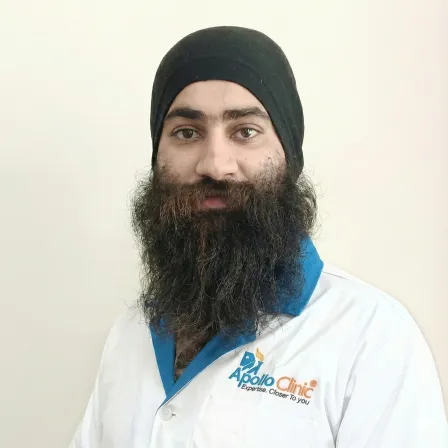
- · Book Dr. Nitnem Singh Sodhi for an online or in-person consult at Apollo Clinics, Lucknow / Gorakhpur.