REBT treats emotional disturbance as the product of rigid, irrational beliefs — musts, shoulds and awfulising. You learn to dispute those beliefs forcefully and live by a more flexible, preferential philosophy.
What REBT helps with
- Anger
- Perfectionism
- Procrastination
- Performance anxiety
- Low frustration tolerance
- Depression
- Relationship distress
How REBT works
- 1Spot the activating event (A), the belief (B) and the emotional/behavioural consequence (C).
- 2Dispute the irrational belief on three fronts: is it logical, true, and useful?
- 3Replace it with a flexible, preferential belief you can repeat under stress.
- 4Cement the change with shame-attacking and rational-emotive imagery homework.
Core techniques
- ABC model
- Disputation (logical, empirical, pragmatic)
- Unconditional self-acceptance (USA)
- Rational-emotive imagery
- Shame-attacking exercises
- Homework between sessions
REBT FAQs
What is REBT in one sentence?
REBT is a structured talking therapy that argues emotional suffering comes mostly from rigid demands on yourself, others and the world — and that disputing those demands relieves the suffering.
How is REBT different from CBT?
Both target unhelpful beliefs. REBT is more philosophical, more confrontational, and centres on a small set of core irrational beliefs (musts and shoulds). CBT is broader, more protocol-driven and condition-specific.
Is REBT helpful for anger and perfectionism?
Yes — REBT is especially powerful for anger, perfectionism, procrastination and low frustration tolerance, because all four are driven by absolute demands the disputation work targets directly.
Where can I try REBT now?
Open the free AI Psychologist chat and ask it to run an ABC with you — it will help you write A, B and C, then dispute the irrational belief in real time.
Start REBT today — three ways
- · Free 24×7 AI Psychologist — practise REBT techniques anonymously, in 100+ languages.
- · REBT Mastery in 30 Days — for clinicians, counsellors and trainees, with AI mock-client sessions and a capstone certificate.
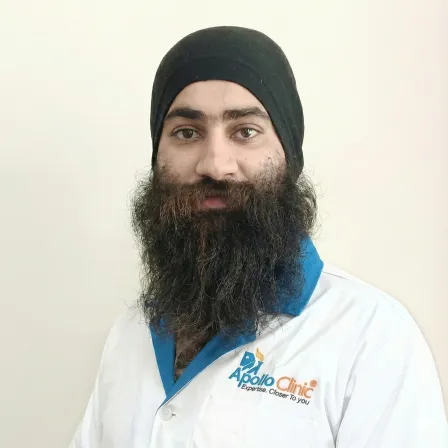
- · Book Dr. Nitnem Singh Sodhi for an online or in-person consult at Apollo Clinics, Lucknow / Gorakhpur.